On Marxist Political Theory & Historical Materialism

Research Questions
- How can historical materialism be developed as a method for political theory that connects context, conflict, and conceptual production?
- How do social property relations shape political problems and the vocabularies used to address them?
- How should we read political theories as interventions that organise and contest relations of power rather than as disembodied ideas?
- What does a conflict centred approach add to contemporary debates about ideology, state power, and political agency in Marxist theory?
My current work in Marxist political theory develops a method for reading political thought as a form of historical practice. The guiding aim is to show how political arguments emerge within specific social relations, and how they participate in organising collective life through concepts such as liberty, sovereignty, authority, citizenship, and order.
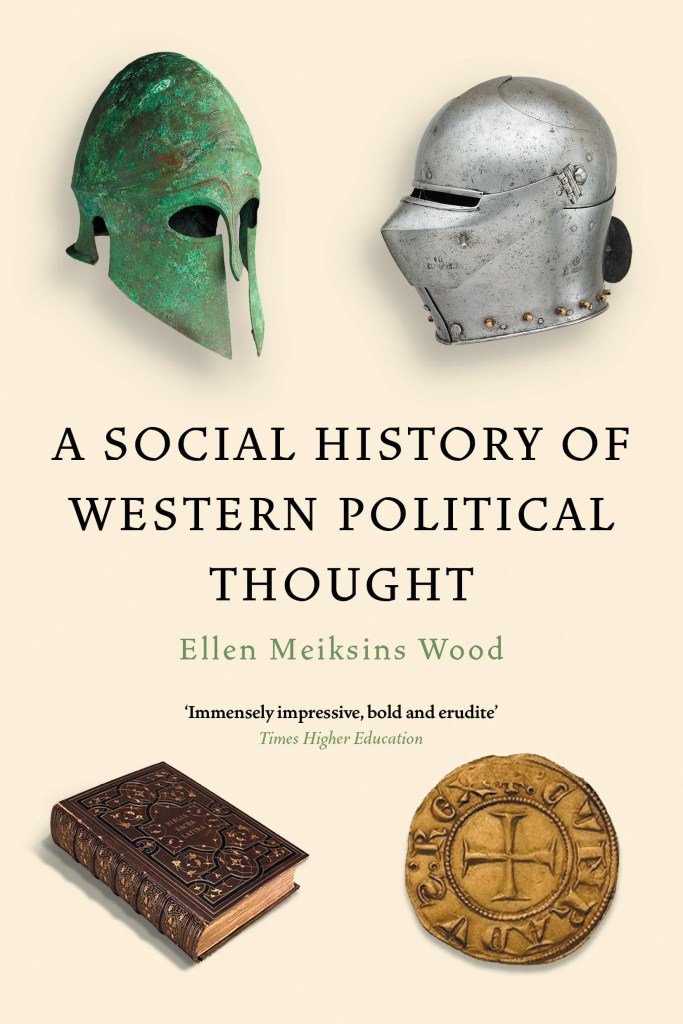
This project draws on historical materialism and the tradition sometimes associated with Political Marxism, with a particular focus on the social history of political theory developed by Neal Wood and Ellen Meiksins Wood. I use that tradition to clarify how context can be reconstructed without reducing ideas to epiphenomena, and without treating texts as self-contained discourse.
At its centre is a structured way of moving between social conflict, social property relations, and the conceptual languages of political theory. This makes it possible to connect intellectual production to historically specific forms of dependence, power, and struggle while still taking arguments seriously on their own terrain.
Research Topic
This research develops historical materialism as a method for political theory. Rather than approaching political ideas as timeless normative positions or as detached canon debates, it treats them as interventions shaped by historically specific conflicts and institutions.
The study focuses on how political theory registers and reshapes struggles over access to resources, authority, and social reproduction. The key interest lies in the relationship between politically constituted property relations and the kinds of political problems that become visible, urgent, and thinkable within a given social formation.
Primary Purpose & Main Assumptions
This research aims to consolidate a clear and usable approach to Marxist political theory grounded in historical specificity.
It rests on several core assumptions:
- political ideas belong to the terrain of social practice and struggle
- context is reconstructed through historically specific conflicts and institutional arrangements
- property relations are politically constituted and help shape class positions and political strategies
- political theories translate material antagonisms into problems of legitimacy, order, freedom, and collective rule
Potential Outcomes
The project supports a broader programme of work with three directions
- methodological clarification that offers a portable framework for historically grounded political theory
- applied historical studies that use the approach to revisit key moments in the history of political thought across different social formations
- conceptual contributions to Marxist debates on state, ideology, agency, and the conditions of political possibility
Berkay Koçak, PhD
Political Scientist & Policy Analyst
 Berkay Koçak, PhD